THIS is the first question in Bloganuary that I’m excited about: I love superhero movies, TV shows, (and though I rarely read them anymore — too busy) comic books. I will tell you at the outset that I have thought about this countless times — and what is it they say, “know thyself”? — if I had a super power I would be a top tier Super Villain.
My power would be Speed, a la Barry or Bart Allen (the Flash) but with Eobard’s sensibilies and cunning.
Eobard Thawn and Barry Allen.
North Korea bothering you? Enter Flashtime (speed so fast time stops) and take out the whole of their army with a sword. Evil CEO got you down? A vibrating hand through the chest will stop that. Say goodbye to Twitter, Facebook, and Google, because I’d run straight through their entire network (and then their creators as well). My version of Flash would only run at top speed so as to be invisible and I would cast myself as the Hand of God come to Earth to pass judgment.
Splat! Splat! Splat! Go most leaders of the governments of the world.
Innocent until proven guilty? Not if I had Speed.
The Flash can also run so fast that he can run through time, so I’d run back in time to the same time and take out multiple targets at the exact same time across the planet.
Barry Allen might be the avatar of Love but I’d be the avatar of Wrath.
Death for a Speedster– I would totally take out Barry Allen if I had speed.
Those of you who have been following my posts in Bloganuary might be surprised. If you think about it, it makes perfect sense — give me Speed, please!
Comic books (and the whole genre of film and TV) are modern myths, our time’s Zeus and Hera, if you will. What are your favorite myths or super hero’s/villains? Tell me in the comments.
When Dante passed under the famous inscription, before the first circle and before the ferry, he passed through an outer lying circle of those unwanted by either Heaven or Hell: The Uncommitted, the souls and angels who chose no side.
Living in Japan, you rarely see homelessness. The few I’ve seen were either alcoholic or mentally ill. Poverty exists but almost always in the context of having a smart phone in pocket. And I can and should not apply anuy -isms to a culture that is not mine. This all said, there is no cause to fight for and so no passionate cause for me to write about.
I do listen to podcasts — I love politics! — and when I’m mid run or mid set what I hear discussed (created to cause outrage) can stir up in me muh passions, but not really. It’s just a moment. A moment untethered to a cause…
Speaking of Dante, this is Virgil and he in the 9th Circle of Hell — not my photo of the engraving by Gustave Dore
Might I become one of Dante’s souls forever chasing after a banner in the afterlife? As Heaven and Hell are within — and I feel no guilt — I suspect not.
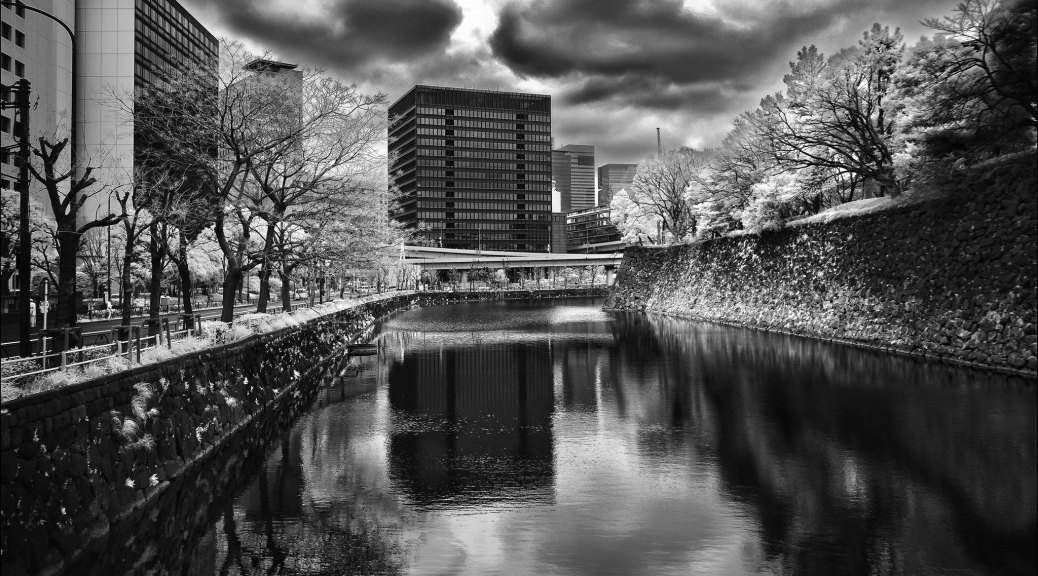
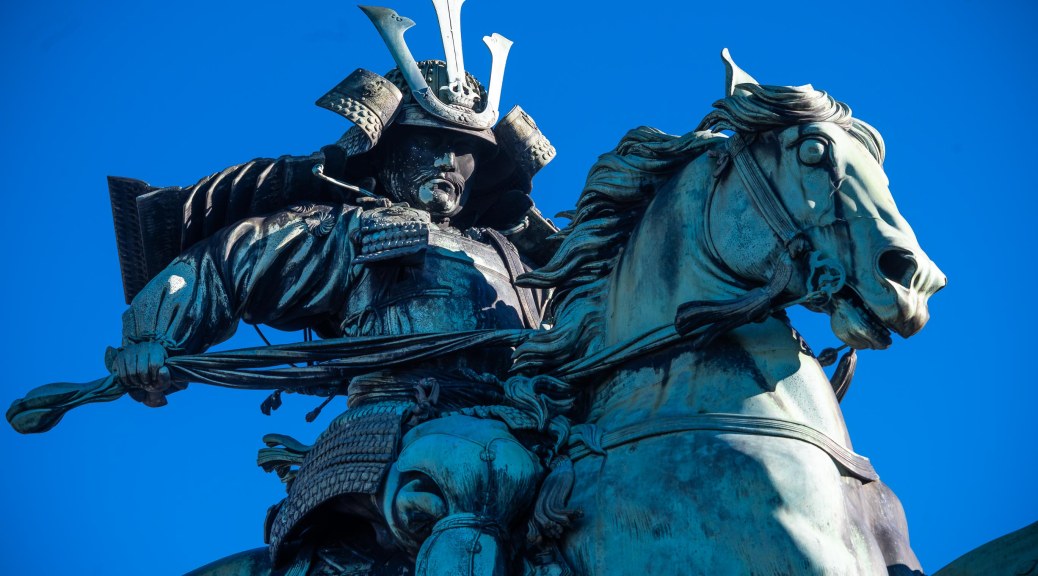
(The Featured Image is of the moat at the Imperial Palace. Millions of Japanese followed the Imperial cause into war. A cautionary tale for what to be passionate about.)
Have you read Dante’s great work? Thoughts on it — or this prompt? Leave them in the comments.
What is a life lesson you feel everyone can benefit from learning?
Saturday just ended. Yesterday, I got up at 5am to work on a video for YouTube; had to go to work; talked my friend out of a bad mood; and just finished shooting and laying in the video track for that YouTube video. It’s just past midnight and I’m here at WordPress because I said I would participate in ‘Bloganuary’ for a month. Life Lesson:
Keep your word.
When you say you’re going to do something, you do it. When you make a promise, you honor it. When you have an obligation, you fulfil it. And neither whine nor grimace about it.
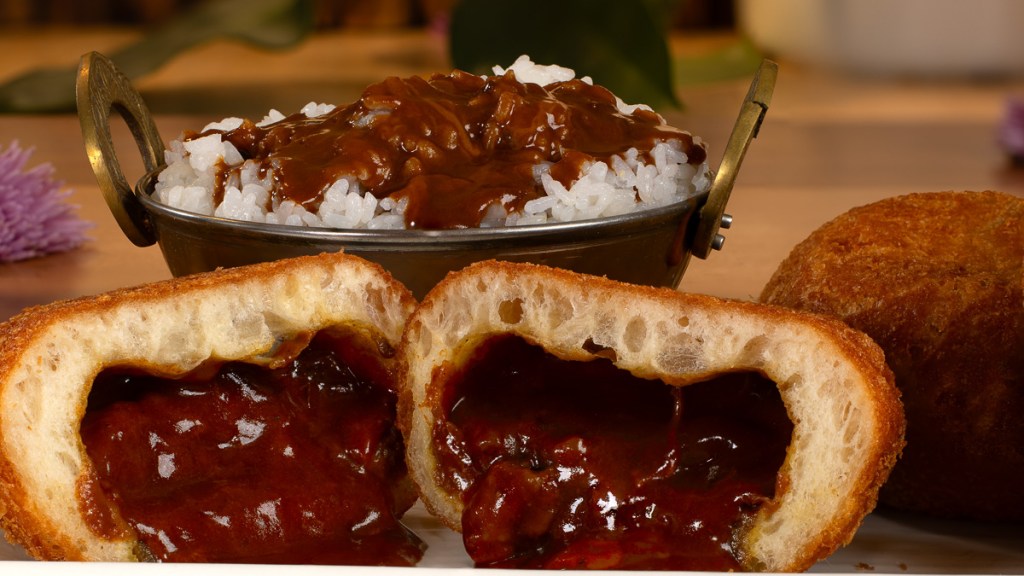
Curry Pan. I’m still learning how to take decent food pics, but this is really delicious.
Doing what you believe is right can be hard when you feel like you’re going it alone. Regarding your life lesson, what is it and are you able to abide by it?
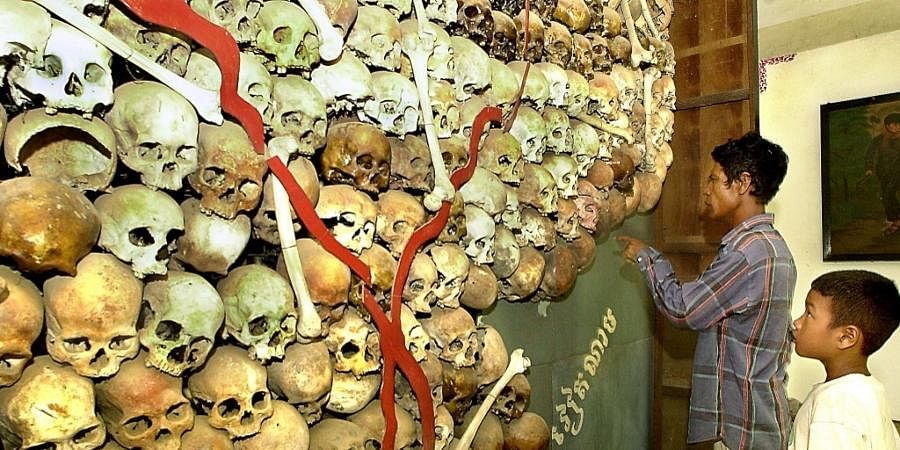
In the mid 1990’s I backpacked around South East Asia (Cambodia, Vietnam, and Laos) for three months. This was back when French archeologists were still excavating and preserving Angkor Wat, before Siem Riep became a tourist boom town and so Phnom Penn hadn’t started to clean itself up for the tourist trade. In the middle of the city was a kind of shelter where I saw real hunger — emaciated mothers holding up children with bloated bellies — and true poverty for the first and only time.
Not my photo, but I have rolls of film from here in my archives. After the war, the people assembled the skulls of 5000 people and made them into several artworks, like this one, a map of Cambodia. The government has since removed the artwork (for the tourist trade) and interred the bones more respectfully in a pagoda.
Vietnam
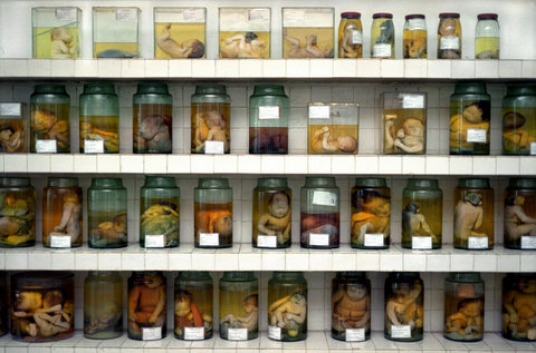
In Vietnam I went on one of the many available tours to experience what it would have been like to have lived through the Vietnam war (essentially museums of gruesome ways to die). I visited several places that had on display the corpses of severely deformed people or jars of foetus’s deformed from the chemicals used during the Vietnam war. I accidentally happened upon a corpse in an abandoned cave.
Not my image, but I have them on film. Hundreds of jars of the babies that were NOT born.I met countess people deformed by war or born with deformities.
Laos
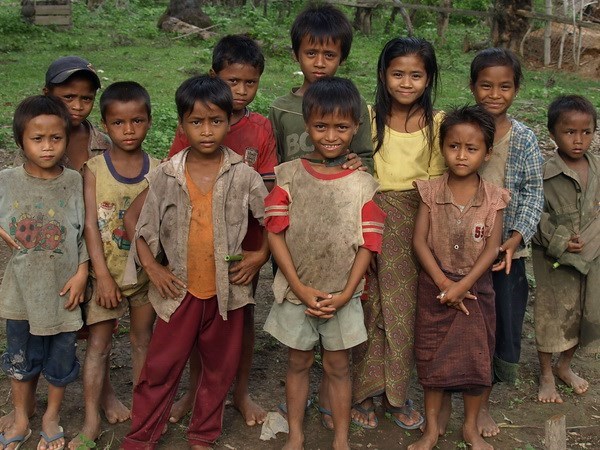
In Laos I traded being guided through Vientiane by Buddhist monks for teaching orphans English at a local temple in the evenings. The children were super enthusiastic little boys from 3 – 16 being cared for by the monks in the temple, the boys learning how to become monks themselves because, without a family, they had no other options. Their life’s path was firmly set for them.
Again, not my photo. Mine are still all on film.
On Obstacles
I have overcome no real obstacles. I have had a few inconveniences along the established path from school to work — and now on the way to retirement (though I never want to retire). I have been blessed. I grew up neglected and bullied and I tell you I am blessed. I am fortunate to have been able to see hardship as a tourist — I could leave — and I am grateful that whatever has been in my way on the path to becoming the man I am today, it has been, by comparison, minor.
May we all be able to put what we see as our problems and obstacles into a larger perspective.
Have you traveled? Did traveling change your relationship to the world? Tell me in the comments.
(This is an improvement to yesterdays discussion on emojis, don’t ya think?)
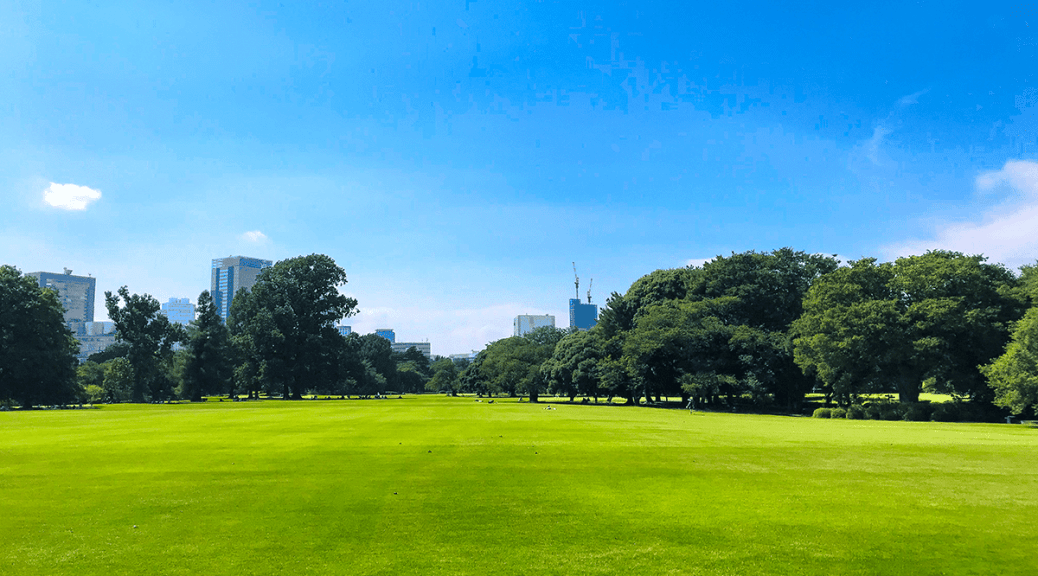
One of my earliest memories as a (very) small child is of color: the vivid green of grass that stretches uninterruptedly over low hills and that particular blue of a summer sky on a not too hot summer’s day. I have in mind an image but of no particular place — real, imagined, or on TV I do not know, maybe it’s the stillness and ease in that image that I’m responding to. As an adult, I’ve seen these colors oh so very rarely. My ideal day would be to stay in that place. I’ve done so only twice in recent memory:
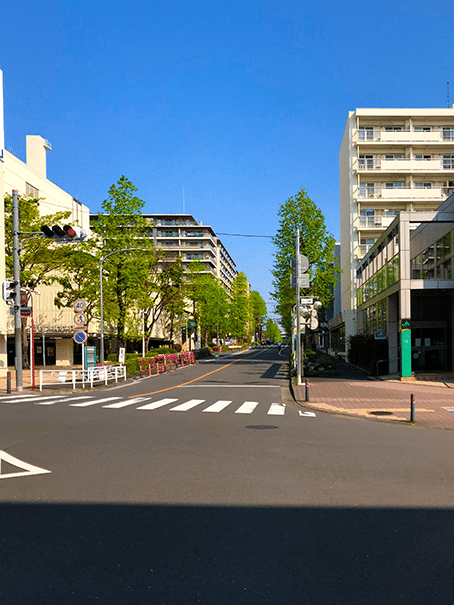
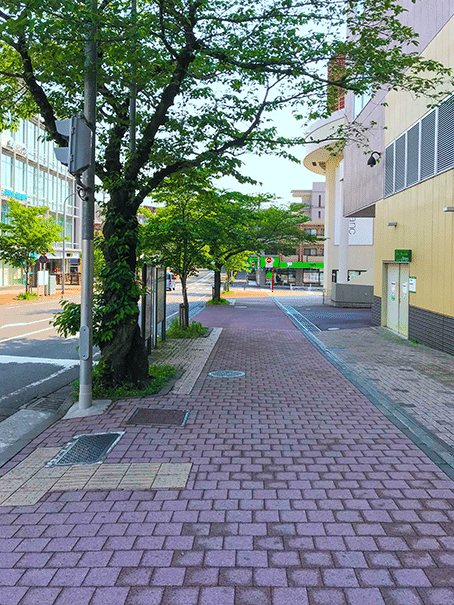
The corner of where I live on day one of the first lockdown. Mind you, I live two minutes from a major train station. This is peak time.
The first was during siesta in Seville, Spain. It was midsummer and the thermometers read 48℃ /118℉. The shops were all closed. There were no cars on the road. And I was on a rental bike riding ’round the city. I brought a packed a lunch, stopped at a pocket park and sat under the shade of an olive tree on a long wooden bench and I saw those colors. Thinking on that day now, it’s really an inner feeling that the outside world seems to share, something like a synchronicity more than the colors.
The opposite side of where I live.
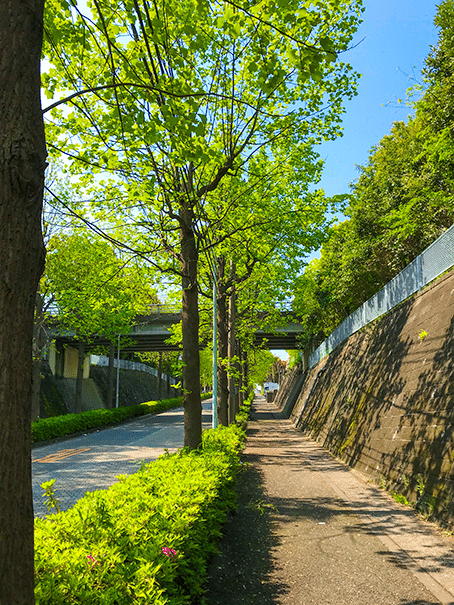
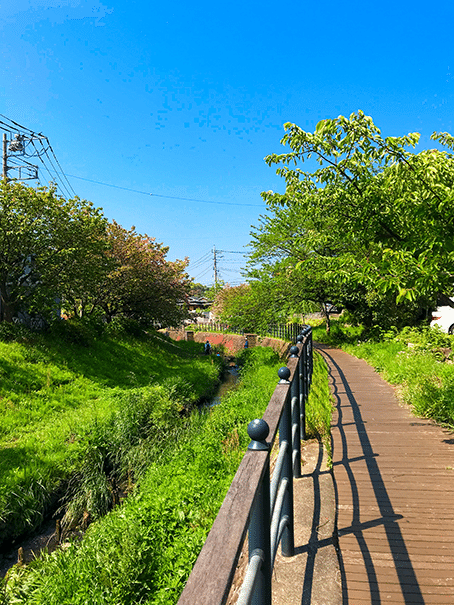
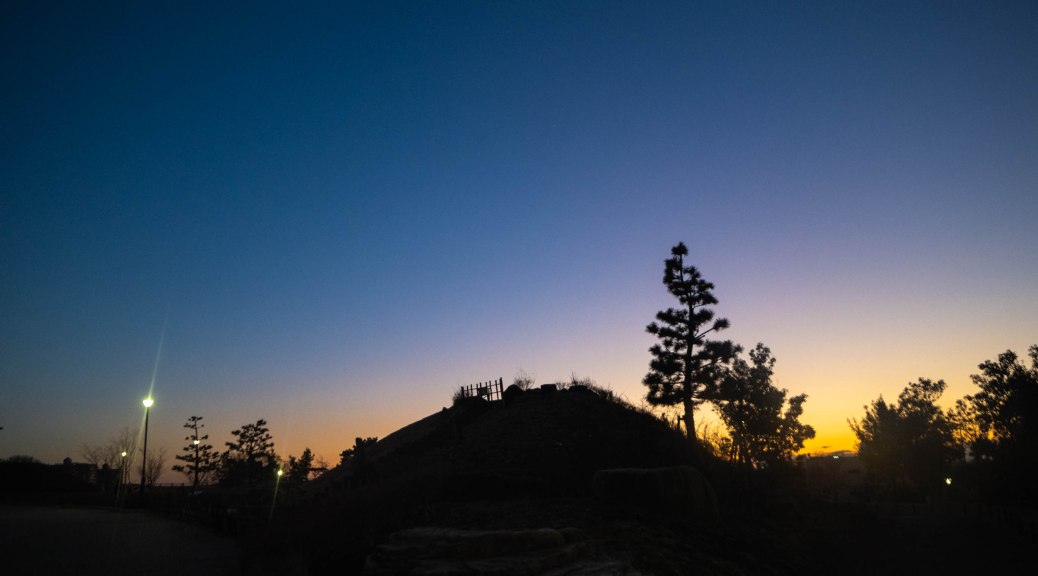
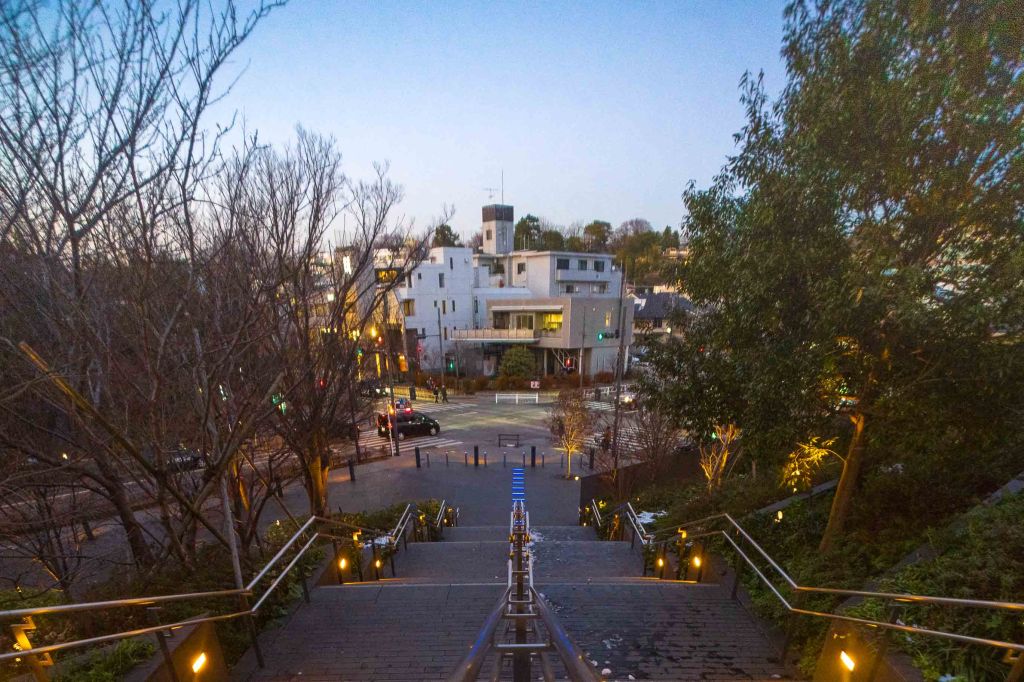
The other time was shortly after the first lockdown was announced in Japan. It was March, I believe. I had decided to to take up jogging and on the first day of the lockdown started my run early, maybe about seven and everything was still. Not a single person. Not a single car on the road. Perfect stillness with a crisp blue sky and new green from leaves just starting to bud. The was bliss (all the photos on this page are from my iPhone on that morning).
This is the jogging path near my home. It should be filled with people, this is Tokyo after all!
Reflecting on what I’ve written, my ideal day is a day without people and all the noise of modern life while in the city with all it’s architecture and convenience. I do not get the same feeling hiking, even on the best day.
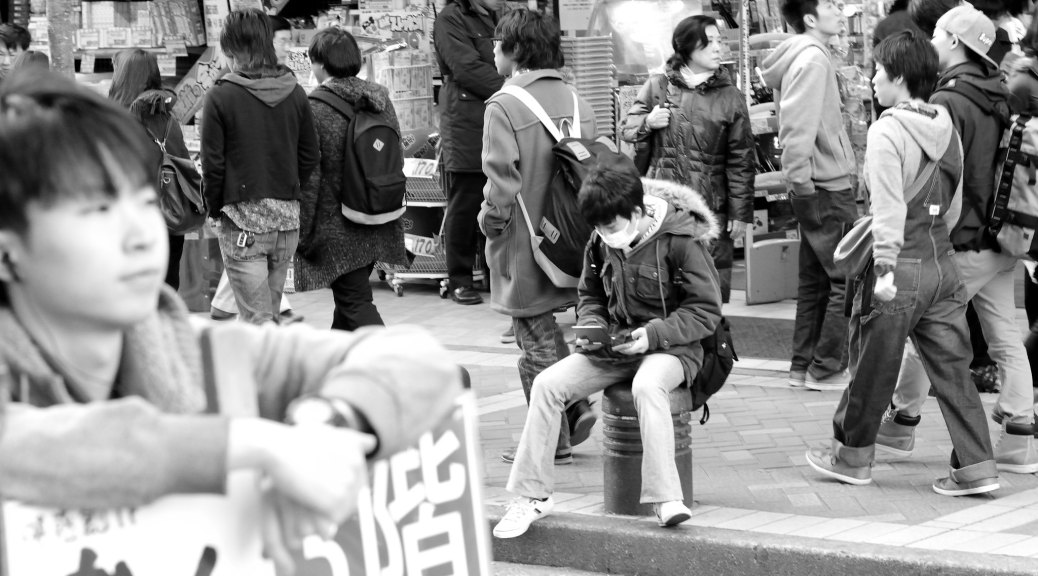
The other side of the station, again, peak time.
What was the world around you like after the first lockdown? Did you enjoy anything about it? Let me know in the comments.
I committed to writing a blog post in ‘Bloganuary’ everyday for a month. But some of these prompts…
I only recently started using emoji’s, like maybe two weeks ago (true story). They are not readily available on my computer keyboard without hand acrobatics and changing menus on my smart phone is too troublesome. And finding the right one — it was only yesterday that I figured out there’s a search bar!
Favorite emoji’s?
Well, because I write so many comments on YouTube this little guy is, maybe, my favorite. 🤤You get it by typing 美味しそう (and as I just found out “delicious” brings it up, too).
I’m really unclear what these various smiling emojis represent, only that I do feel a tonal difference I can’t justify. ☺️😄😁😊😀😃
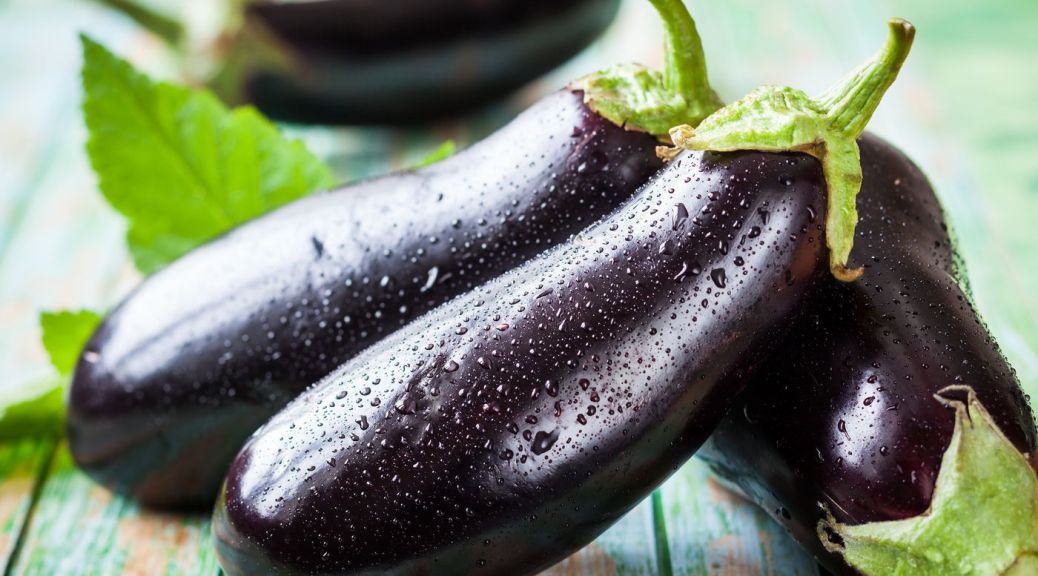
I really have no idea what what this guy means. 😅 I kinda think he’s breaking a sweat and the description reads “grinning face with sweat” as if smiling makes you sweat? Like the peach 🍑I don’t really get it — and on this topic, it took me way too long to figure out 🍆. And how do you use 🍆 in a sentence? Is it the adjective, subject or predicate? I really don’t know.
On YouTube people leave sentences composed only of emojis and I’ve no idea if it’s a complement or an insult. Google Translate is no help and if Google can’t translate it, does it really have a meaning (philosophical question for you). BTW, if I don’t have my glasses on, any effort one takes in adding emojis is just wasted: I just see blobs of color.
So emojis 🤷♂️.
None of the images on this page are mine.
What’s a better prompt than this or one that you would have rather seen? Tell me in the comments.
This question is meaningless. There is no such thing as ‘living boldly’. The idea that one can is coded into the algorithms that drive Twitter, Instagram, and Facebook: It presupposes that a series of composed and curated snapshots is real life. It is not. And so this question is meaningless.
If you want to live a good-life, then find the qualities that you want to be defined by and strive towards being that person.
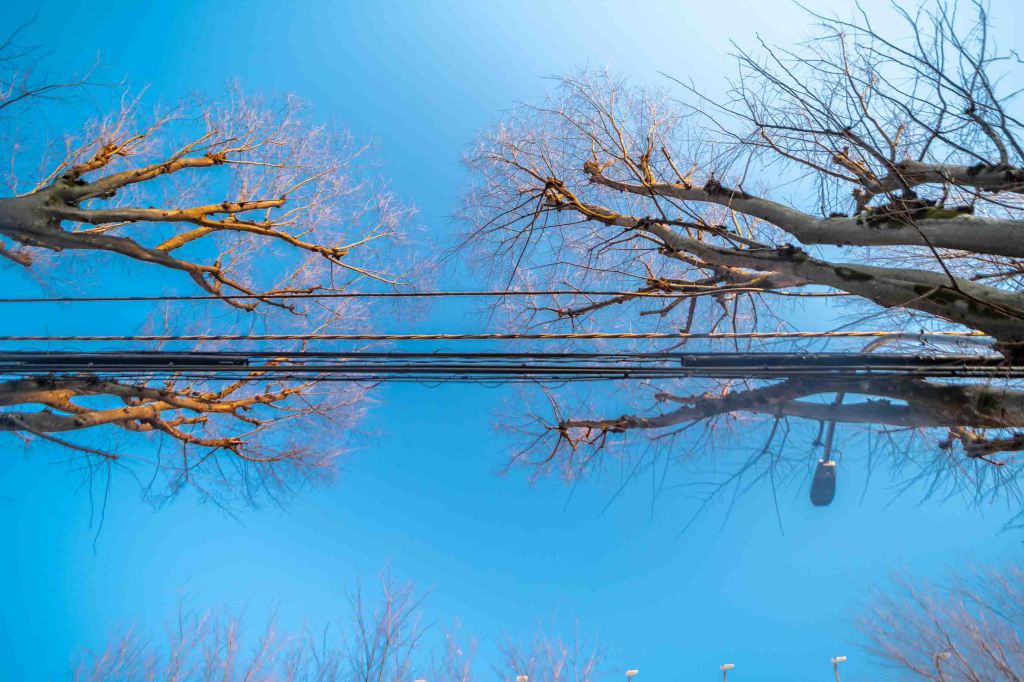
Change your perspective — look UP.
Do you agree or disagree with me — you’re safe, I only bite on weekends — let me know in the comments.
I use the OmniFocus planner on my computer and iPhone and everyday, without fail, I am reminded to do the following three things:
Gratitude is important to me. I grew up with nothing and now I might shoot around Tokyo with 20,000USD’s worth of equipment in my backpack and an iPhone in my pocket. Plus I live in the safest, cleanest place in the (so called) developed world — as a guest, a fact I’m very aware of, and grateful for.
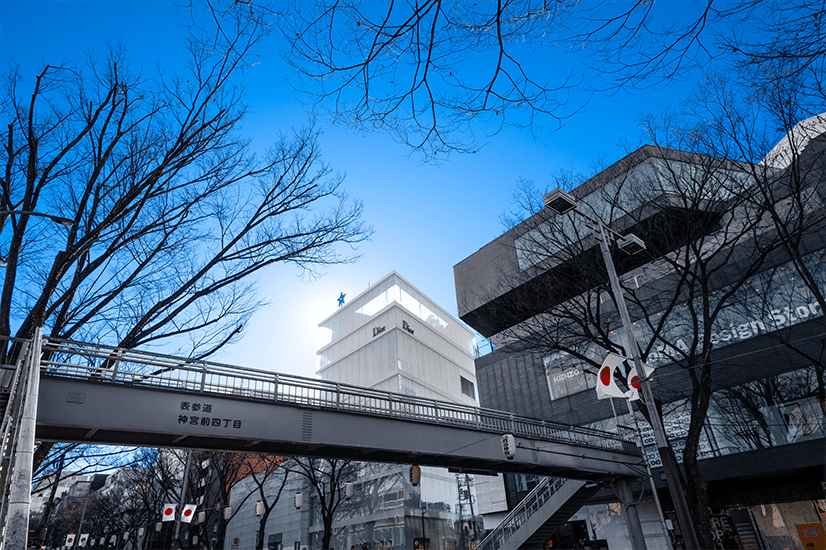
Not too far from where I live, the Dior building on Aoyama Street.
Today is Adults Day in Japan, a national holiday, so I had the day off. The weather was a veritable balmy 8 degrees (C) today, but I chose to stay in to work on my YouTube channel and reddit’s Photoclass 2020.
Because of the Christmas/New Year holidays, I needed to stay away from my channel to stay centered in the real world with my family and friends, yet when I went back this morning, I had hundreds of messages from my subscribes asking where I was and wishing me a good year.
Thumbnail from my latest video, Tofu Teriyaki.
My apartment is clean, my mind is quiet, and though I’m avoiding doing yoga (which I really need to do because I’m tight) I have had a wonderfully peaceful day. I was even able to listen to my new favorite artist, Fuji Kaze, while I worked.
I am very lucky and I know it. I make it point to wake up and think of all the reasons I have to be thankful, then I run over all the problems that might arise so I am prepared, then I think on people to inspire me — and then I get up. So I am very grateful that today’s topic was very easy for me. 😄
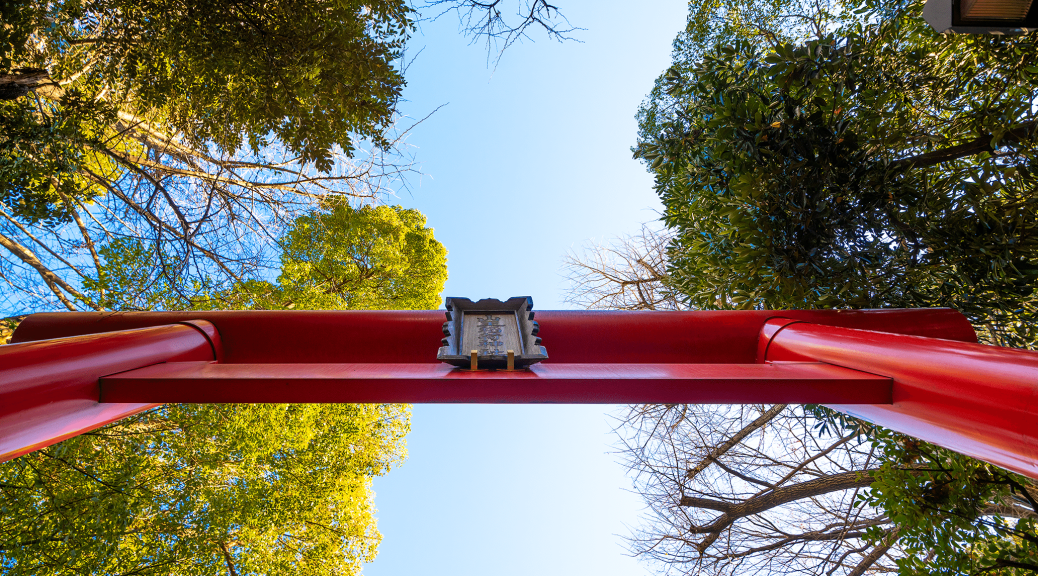
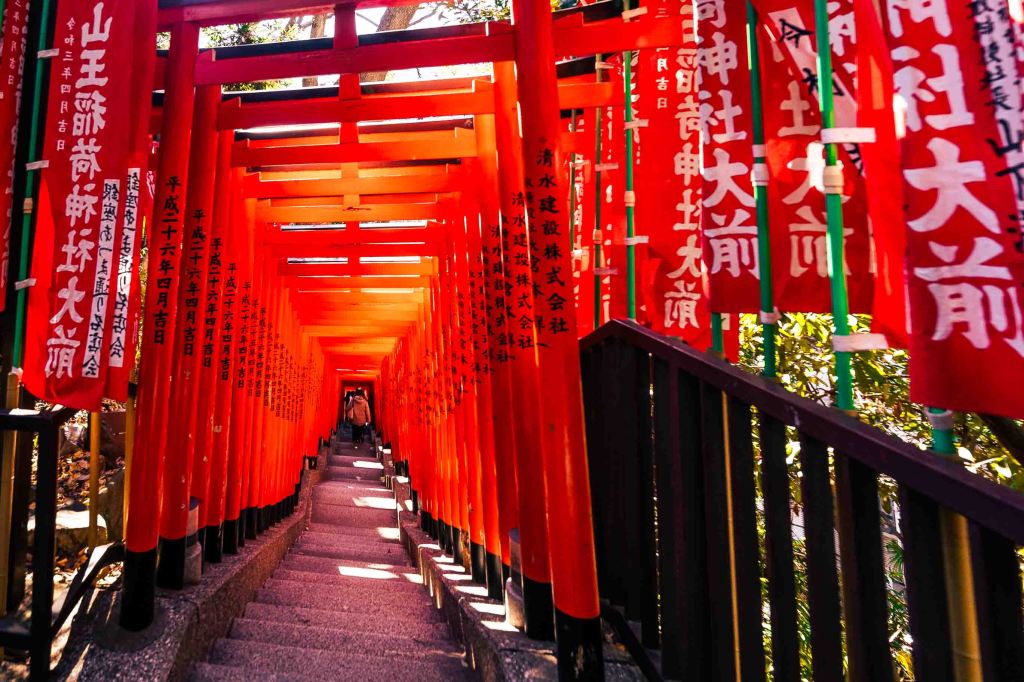
Going through the gates is good for luck.
Post a link to you blog page so I can visit to see what you’re grateful for. You can also just tell me here. Also, do you have any ‘morning rituals’? What are they? Tell me in the comments.
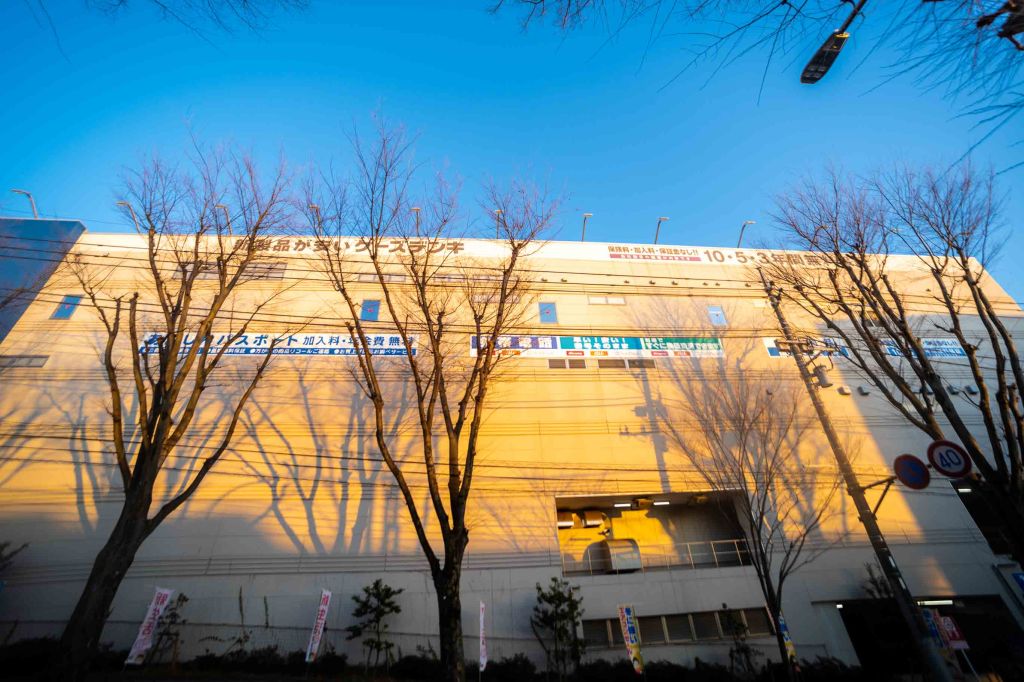
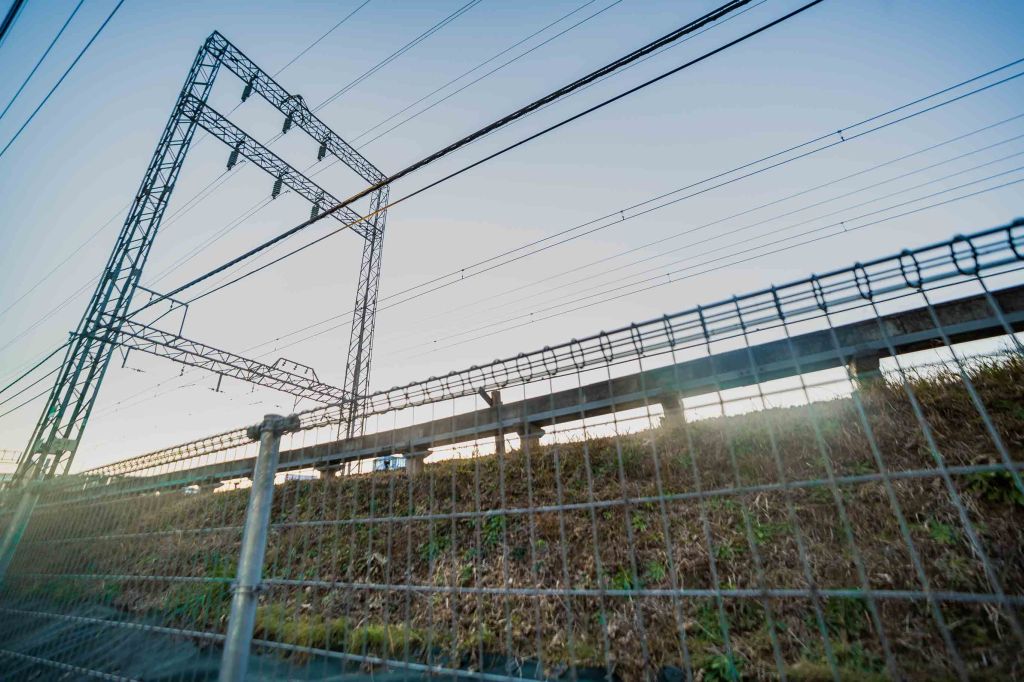
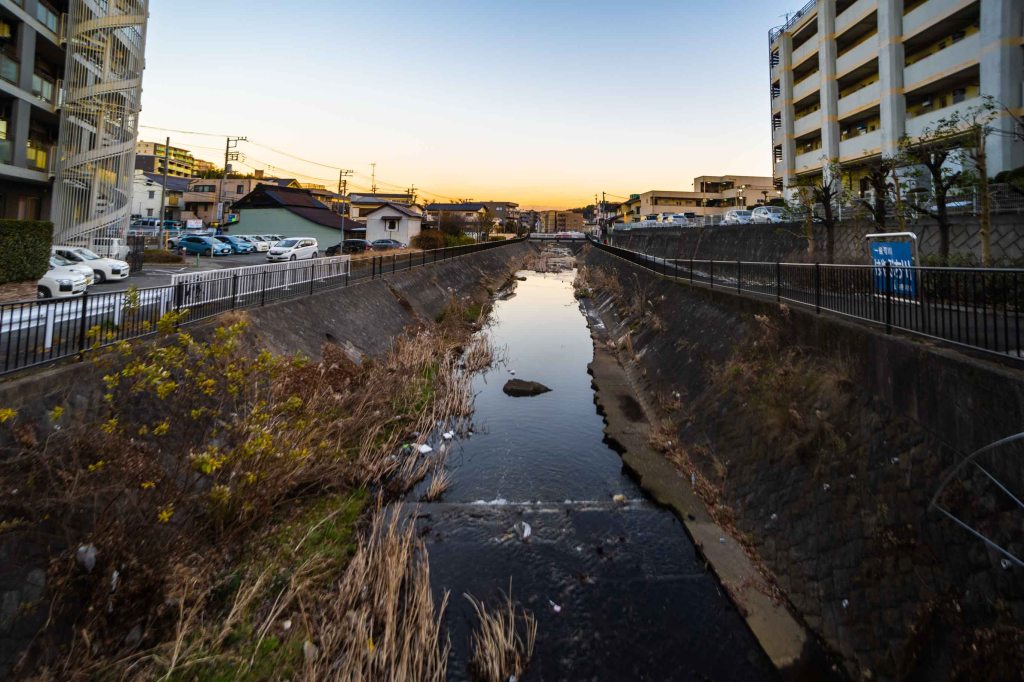
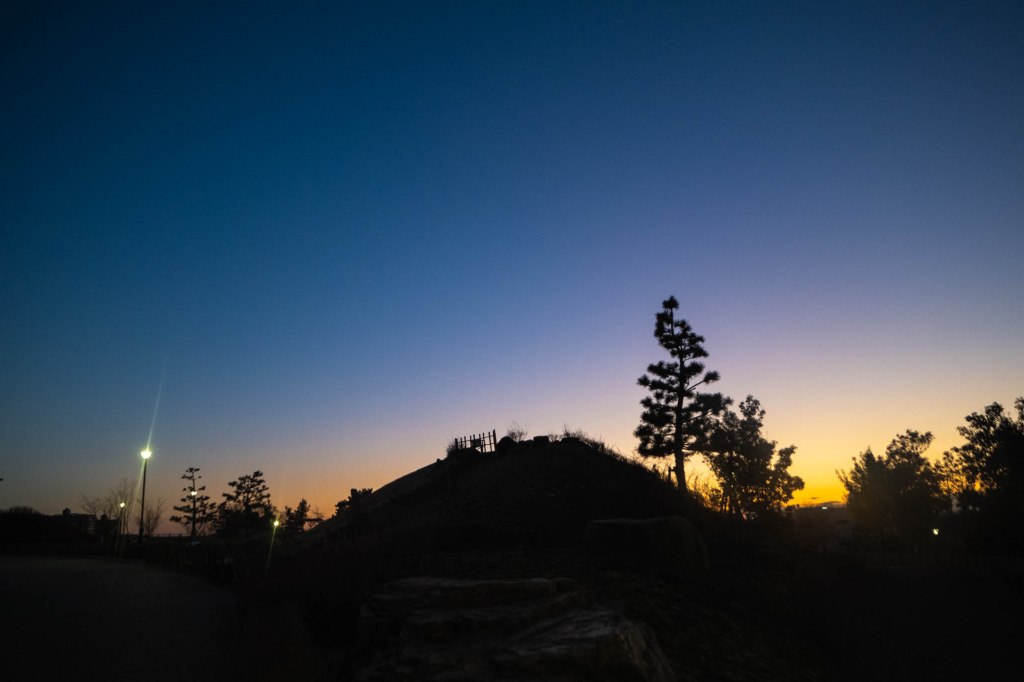
Assignment one: Go to a random place with no photographic potential and come away with ten decent shots.
If you’re interested in following along, the assignment is here.
The spot is about 10 minutes from my home. I walked along the river. My favorite is the first photo. I like the way the two trees seem to be reaching out to one another.
Looking at it now, I think I should have balanced to two sides more.
Photo 2
Photo 3
Photo 4
Photo 5
Photo 6
Photo 7
Photo 8
Photo 9
Photo 10
Leave your comments and criticisms here. And if you belong to the photo challenge/class, let me know. 😄
I’m a 6’4″ (192cm) American man living in Japan, my whole blog could be about this! 😆
I love the record breaking rollercoasters at FujiQ, like DoDonPa, Takabisha, and Fuji Yama, but take me to Tokyo Disneyland and I’m headed straight for Pooh’s Hunny Hunt (Space Mountain can wait).
It’s not that I’m a kid at heart (I’m really not). I have my likes and they don’t often fit the tone and tenor of my voice (you can check out my Gravitar photo in the upper right hand corner to see get an idea of what I mean).
Go your own way.
Yesterday I saw Spiderman and loved it — my face still hurts from smiling so much during the movie — but not a one of my friends is interested in a “child’s” movie, so who do I chat up on Instagram? My best friends 17 year old daughter. 😆That might be sad but it is definitely true.
While I very much enjoy talking politics, visiting museums, and playing sports I live in a place where having a cooking YouTube Channel raises a few eyebrows. Men can and do cook here (in Japan) but…
Teriyaki Tofu over rice: Teriyaki Tofu Donburi, click the picture to see the video.
So people mistakingly assume my likes and interests based on my physical appearance. It is what it is and I’m neither mad nor annoyed by it.
Have you seen the new Spiderman? Tell me in the comments!
My other favorite movie this past year was Malignant — it was just a joy to watch! I saw it three times in the theater, and had a blast each time. Make me happy and tell me you loved it. 😁
Of all the topics, I like this least, which is strange as I can tell you clearly what I like about my photography and videography. I have to accept that I do not like my writing because I recognize that its quality has sharply declined.
I’ve lived in Japan for more than 20. I’ve also lived in France and India, which is to say that I’ve been outside the English speaking world longer that I’ve been a part of it. That fact, combined with the simple mindedness in social media communications means what was once my strongest attribute is now my weakest. I had honestly not thought about that reality until thinking on this topic.
My reading of good books and poetry — in English — is also in an inverse relationship with all the social media I consume, so my exposure to clear and concise expression is limited.
What do I like about my writing at present? Not much. About my Japanese writing, I love that I can write kanji (the complex Chinese characters). It makes traveling in China and communicating with Chinese people (outside of Western counties) possible — and fun. It also has deepened my understanding of Japanese.
Can you speak — and write — in a foreign language? Which ones? If not, what would you most like to learn? Let me know in the comments.
This is a tough question because I always laugh. Not one hour ago I slipped and fell on the ice at the station — Thud! 6’4″ me on my back in the snow — and I laughed. Loudly. The passing Japanese people just glanced and walked on. But what’s a man to do? Falling is a silly thing to be embarrassed about. I could imagine what I looked like, so laughing was natural. Funny how everyone walking by looked so serious.
I can choose to enjoy most anything. This is to say that laughter is a choice, at least for me:
As I’m moving through life with my mind super focused on the task at hand and I make a mistake, I can feel the choice: get angry, don’t react, laugh. I laugh (most times).
So I have to approach this question in a different way, as what makes me laugh is my disposition: My reactions are a choice and I (mostly) choose to be stress free and at ease.
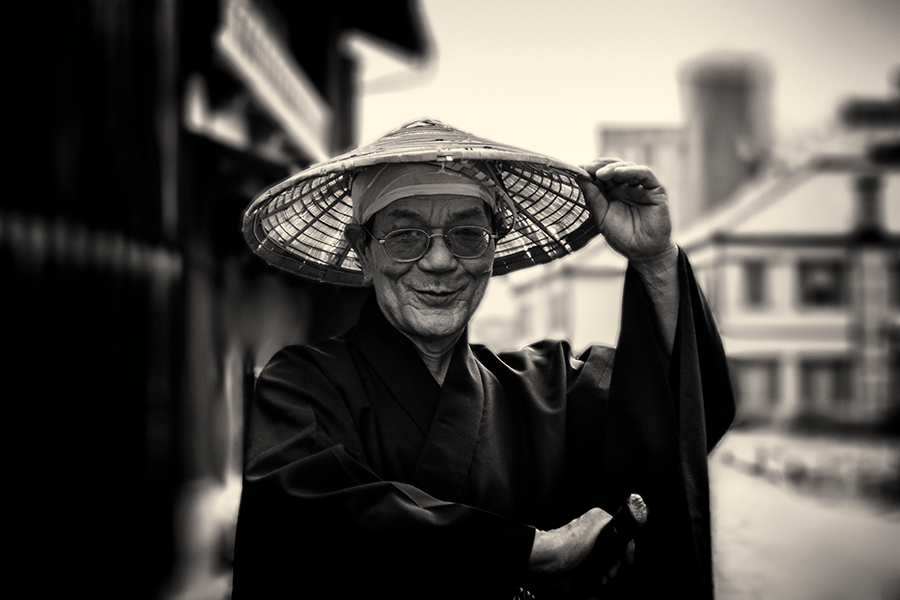
An actor in Kyushu.We all play a part. Know the character you’re playing. 😉
Tell me in the comments, do you think you have control over your emotions or do you think your emotions have their own mind? I’m genuinely curious how other people deal with bad situations.
This is the easiest of all the prompts, Ernestine Shepherd, the 85 year old female body builder.
Ernestine started weightlifting at 56 and began to compete a few years later. Being a reformed gym bunny, I know how hard she physically andmentallyhad to train to get to where she was and is. The majority of people did not believe in her when she began — They actively discouraged her because of her age! — but she had the mental fortitude, paid no attention, and achieved besting people a quarter her age.
What she has done with her body is no small feet, even for a young person (much less and 80 year old), but she goes on: Ernestine has also become a published author and a personal trainer, showing us all that age is not an excuse.
I admire Ernestine’s dedication, commitment, fortitude, and outlook. I follow her on Instagram and her posts always get my butt to the gym. When I think I’m too old or too tired, I remember Ernestine. Long live the queen!
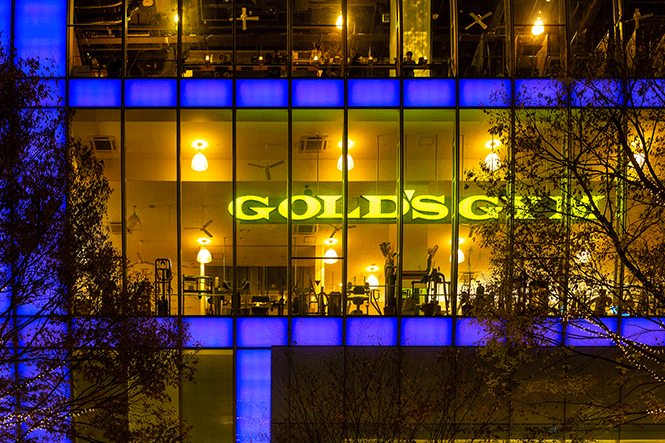
Harajuku Branch of my gym. 😁
Be sure to tell me who inspires youand if you’re participating in Bloganuary, post a link to your blog post in the comments below so I can check it out! Thank you.
I am not musical. I did not grow up longing to play an instrument. And to be honest, I don’t have a particular fondness for piano music — I do sometimes covet the ability though.
On new year’s eve in Japan the national past time is to watch a musical show called Kohaku. Japan’s top musical artists are separated by sex — the women are team Red and the men team White (a call back to The Tale of Genji) — and they alternate extravagant performances in a variety of musical styles to win (now chosen by the audience at home through votes made on our remotes).
This year they introduced the pianist/singer/songwriter Fuji Kaze. He’s from a remote village in the north and as a child he wanted to learn piano. He took lessons once a week and filled in the gaps with YouTube videos. When he was in 6th grade, his parents let him start his own channel and by 22 he had a nation wide hit, Nan Nan (see below). Now, an established pianist, he’s started working with major artists in Japan.
You can still watch his older videos on his channel — and I have been, he is extremely charming and earnest. What I want to stress is he is self-made. He didn’t just wish, he did.
Fuji Kaze does sing in English — he taught himself English — and has a very nice cover of Close To You (which you can find on Apple Music). Here is a Japanese song with some English mixed it, I especially like the way he sings this lyric.
“My heart is saying I’m not caring no more Somebody slap my ass and let me go I used to dance but I ‘m losing my beat And now I lost my feet Somebody bring back to me That love and just let me be”
Tokuninai, Fuji Kaze
Watching Fuji perform on New Year’s eve made me wish I could express myself through music — It made me, once again, wish I could play the piano! — but more importantly, he reminds me that we have the ability to learn anything we want, whenever we want.
Do you agree? Let me know your thoughts in the comments.
During the new year, people go to temples and shrines to pray for a good year. They write their wishes and goals on these wooden plaques and hang them in the shrine/temple.
People who comment or send me mail tell me I can improve my blog by talking more about my life. From their advice I have been adding bits and bytes. A part of my life story I never speak about is poverty: I grew up poor. After my parents divorced my mother and I were so poor we couldn’t afford a vacuum. My mother borrowed one every couple of months from her half-brother’s wife. (To clean the carpet we used the back side of tape.)
We were poorer than most because my mother was unable to work — why is another story — and so we depended on welfare, food stamps, and kindness.
Sometime in the 80’s the government started cutting the welfare and food stamp programs. I was used to not having much. Our furniture came from hand me downs, our TV a tiny, portable black and white. I only ever had a couple of pairs of pants and a few shirts. This was the baseline for my day to day — but I didn’t know how good I had been living until those cuts came into effect. One example should make my meaning clear.
I came home from school one day to my mother eating an onion sandwich: Two slices of day old bread, a slice of raw onion, French’s mustard. We had nothing else. I recall she smiled, said it was delicious and wished she had know — which sounded plausible through her souther drawl, but the sadness in her eyes gave up the lie.
I broke out of what I hear called a The Cycle of Poverty. I am aware that a lot of my choices are a reaction to having been poor. I have 37 pairs of shoes because I grew up having just one, poorly fit and used to the last — but I don’t waste money and never borrow.
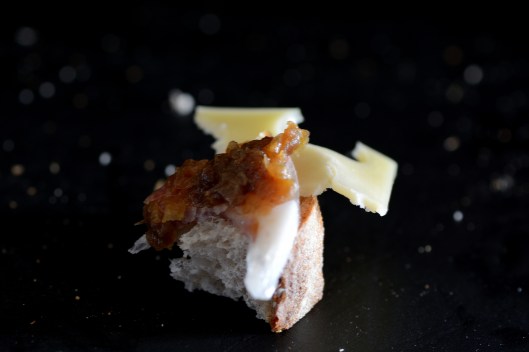
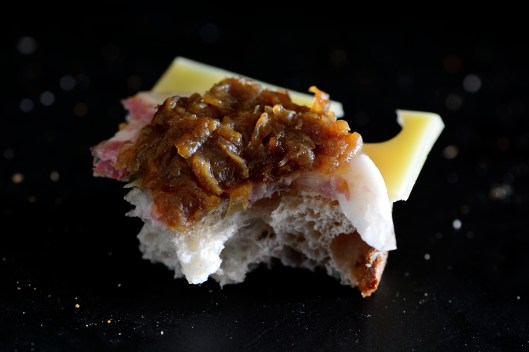
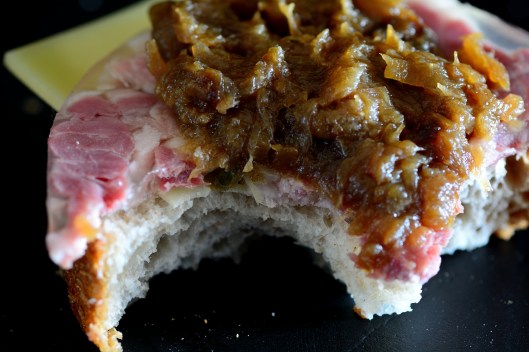
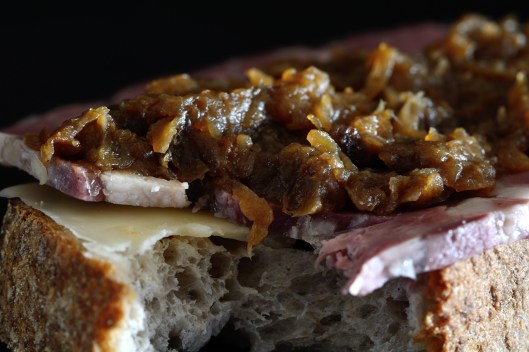
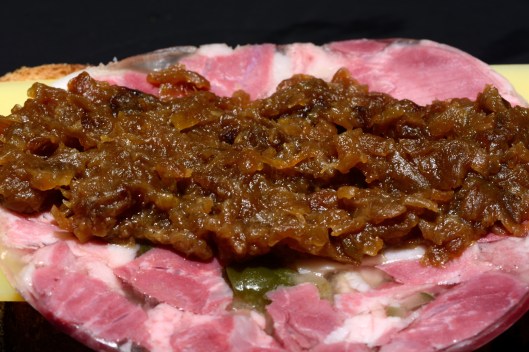
Although I rarely talk about it, I own up to where I came from. I know from experience that you can chose how to remember what’s passed. To a degree you can reshape a memory — or honor it to let it go. So I took the pungent onion and made it sweet; I crafted my own mustard to make it mine; I bought the very best bread and made an Onion Sandwich.
At least 2 pounds of brown onions sliced thin (I fill my 12 liter/quart stock pot which reduce to about 2 cups)
Up to 2 tablespoons of butter (you really don’t much, the water in the onions will prevent them from sticking for most of the cooking)
tier three (optional)
Up to 1 tablespoon sugar (near the very end to help caramelize the onions or further sweeten them, taste before adding sugar)
Up to 1/4 cup strong beef stock near the very end of cooking (to loosen the brown bits at the end of cooking)
Up to 1/4 cup water (to loosen the brown bits at the end of cooking)
Method: Put your butter or oil in a large pot. Peel your onions, remove the root end and cut in half lengthwise and slice thin. Add them to the pot with the butter. When you’ve finished all your onions put the pot on the stove and turn it on medium to melt the butter. Don’t stir the pot until it’s heated up, about 3 to 5 minutes. Stir the pot and make a decision:
If you’re going to be in the kitchen and want the dish to finish quickly turn the heat up to high and stir every five minutes or so. They’ll finish in about an hour, depending on the volume. If you want to relax, turn the heat to low and come back and stir the pot ever 20 to 30 minutes. Depending on the volume and heat, this method will take a minimum of three hours.
Your onions will go through three distinct phases:
Individual slices slowly becoming a mush with a lot of liquid, almost like a soup. This phase is the longest and requires the least amount of attention.
They will start sticking to the pot. Here you have stir more often, but there’s still a lot of liquid. At this point you’ll notice the start of a color change from translucent to light brown.
Finally they will brown during which you need to constantly move the onions in the the pot, scraping the brown bits off as much as you can. Those brown bits are flavor.
The temptation is to remove the onions when they start to stick. Don’t. Reduce the heat if you wan to but bring them to a dark brown. When they are near dark brown, this is where you would add sugar. When you can no longer scrap the bits off the bottom and sides of the pan then they are done. Remove them from the pan. You can also remove all but a tablespoon or two and add either 1/4 cup of water or strong beef stock to loosen the remaining brown bits of flavor at the bottom of the pan. I keep these separate from the caramelized onions to flavor other dishes.
3 kilos (8 pounds) reduced to about 2 cups caramelized onions. Notice the brown bits, at this point I can no longer scrape them off, so the onions are finished. At this point I add water or broth to get those bits of flavor stuck all over the pan — don’t waste all that flavor!
homemade mustard with canned green tomatoes served with my onion sandwich
Pastry is simple, but food stylists, paid professionals, and ideals on what pastry should be have set a high bar on personal expectations zapping creativity and confidence — and the will to try.
For any pastry, flour is mixed with fat and liquid. We add fat to the flour to cover the gluten. Just as water and oil do not mix, the fat coats the gluten, keeping the water away. Making less gluten results in tender crusts. Recipes that call for butter also include another fat. This is because butter is 20 water and that extra shorting, oil, lard is to make up for that water to achieve the golden ratio for pastry: 3, 2, 1
3, 2, 1: three parts flour, two parts fat, one part liquid
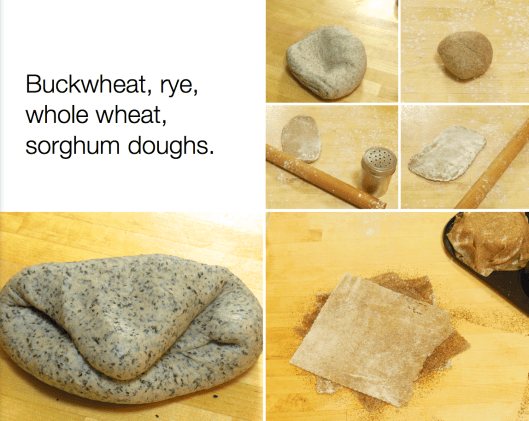
People who want to decrease calories often remove some — or all — fat; others add whole grains to improve the nutrition; others add milk, stock, or even vodka for one reason or another. This means you can change the flour, fat and liquid to meet your needs.
To make them flakey I roll individual sheets, stack them on each other layered with either butter, oil, cocoa, almond meal, powdered milk or even sugar. This provides flavor and helps the individual sheets remain separate, so when you you bite, the shell crumbles — or flakes.
This is the formula for standard French pastry.
Tier one (you must use) 2 cups All-Purpose flour (you will add flour throughout the rolling, so precision through grams is unnecessary) 168 grams or 6 oz (unsalted) butter as cold as possible 56 grams, 4 tablespoons shorteing or lard as cold as possible. Ice water Up to 1/4 teaspoon salt
Tier three(optional) Cinnamon or other sweet spices (for sweet crust) Fine herbs (for savory crust) Up to 1 teaspoon Vinegar (to weaken gluten) Up to 1 tablespoon sugar (to brown the crust) Up to 1/4 baking soda (to brown crust, works with sugar)
Method:
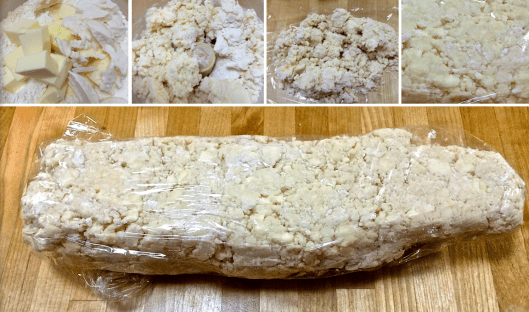
Cut the butter into chunks. Put the flour, salt, butter and shortning in a food processor with the S-Blade (pic 1 below) and pulse three times, which feels too short, but only three times. Turn on the machine and add all the water and vinegar all at once. In seconds it will form a ball, or otherwise clump together (pic 2). Stop the machine. To harden the fat and allow the dough to absorb the water, quickly place the dough in a plastic bag (pic 3) and put in the refridgerator for at least an hour or over night — you do not need to handle the dough (pic 4).
It looks horrible, but notice all the chunks of butter. Even when you make it in a bowl with a pastry cutter or the tines of a fork, your butter must be in little chunks.
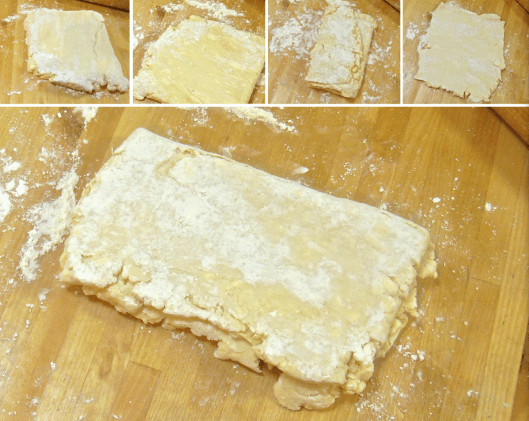
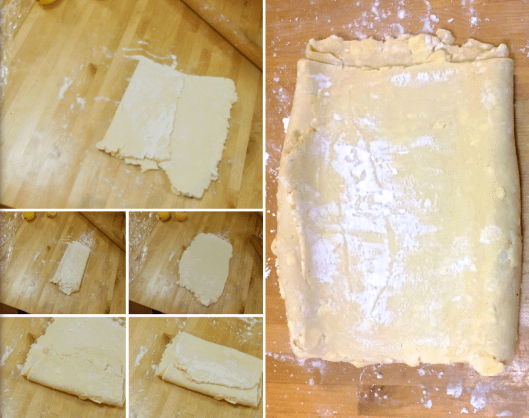
Take the dough out of the refrigerator and press it into a rectangular shape through the bag (pic 5 above). Put the contents on a floured surface (pic one below). Sprinkle flour on it and gently roll it out (pic 2). Sprinkle a little flour on it and fold it in half (pic 3). Sprinkle more flour and fold it into a quarter (pic 4). Put it back in the plastic bag and refrigerate for at least a half an hour.
As you work with the dough gently push the edges in to form a rectangular shape. It will not form a rectangle until the very last step.
Roll the dough into a rectangular shape (pic one below). Sprinkle flour and fold it into thirds, like a letter (pic 2 and 3). Roll again into a rectangular shape (pic 4). Sprinkle flour on it, fold it into thirds again and put it back in the refrigerator for at least half an hour.
Look carefully and you can still see pieces of butter. Notice that the edges are misshapen. Each time you roll, gently press the edges in.
Take out the dough and roll it into a rectangular shape and apply a very light dusting of flour then fold it into thirds (pics 1 and 2). Roll it out again and fold it into thirds. Apply just a little flour fold it into thirds and put it in the refrigerator for half an hour.
Notice the little bits of butter in the dough. That’s perfect. The edges are still ragged. The dough now feels like dough.
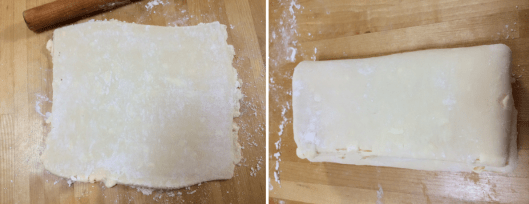
Take it out of the refrigerator. Roll it out one last time and fold it into thirds. Congratulations, you’ve made pastry. Cut it in half and freeze or refrigerate it. The next time you roll it out you can make a pie, a tart, a quiche.
Tighten up the edges with your hand to form a rectangle then fold those imperfect edges (to the left and right) over into thirds. You’re done. You can cut it into two pieces and freeze or refrigerate until you need them. And, once again, notice that you can still see tiny flecks and pieces of butter.
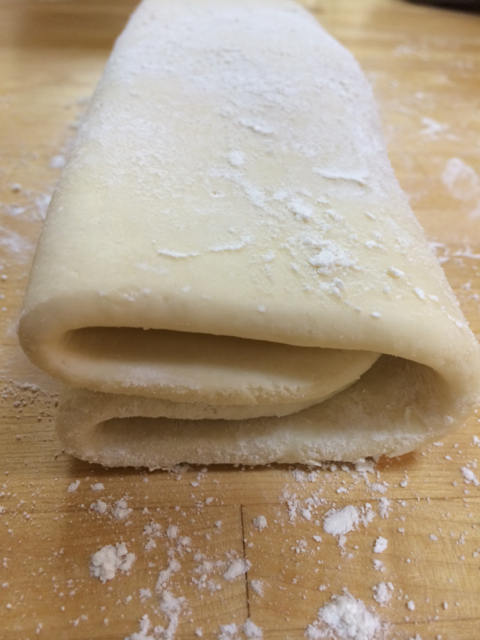
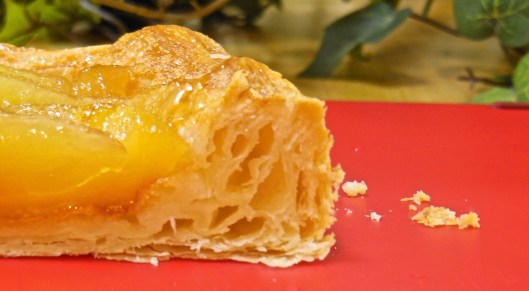
Each time you fold cold dough, you create laters of fat. When that fat melts and the steam escapes it creates a flakey crust.
The principle is the same for any dough with hard fat. Each time you dust with flour, fold the dough into thirds and roll it out, you crate layers. As long as the dough is cold the fat stays sold and separate creating a micro layer of fat. However, it if gets warm, the fat melts into the flour. The dough is still good to eat, but it’s no longer flakey. Look carefully at this finished crust. The holes are from those small, thin layers of cold butter.
In the next post we’ll roll the dough into pie, tarts, and something very special.




















 made by you and I